
What Nobody Tells You About Remote Sales Jobs in the USA (2026)


Why the USA is the Epicenter for Remote Sales Careers
Imagine finding a career that offers top pay and lets you work from anywhere. That dream is most alive right now in the United States.

In 2026, the US market isn’t just participating in the remote work revolution; it’s leading it, especially for high-impact roles like sales.
The numbers tell a powerful story. Recent data shows that remote job postings in the US surged by 20% in early 2026, with high-paying roles driving much of that growth. Furthermore, about 27% of all paid workdays in the country are now done from home, a figure that has firmly stabilized. This creates an incredible volume of opportunity. For sales professionals, this translates into more companies than ever hiring remotely, offering competitive salaries and the flexibility that modern workers prioritize.
But here’s the catch. This explosion of opportunity comes with a major challenge: noise. With so many postings for remote jobs and fully remote jobs, it’s overwhelming. How do you sift through them all? More importantly, how do you spot the legitimate, high-quality roles hidden among the less credible listings? The dream of remote work in the USA is real, but navigating to it requires a smart map. You need a clear strategy to find not just any job, but the right one. For a focused approach, our step-by-step guide on finding legitimate remote sales roles can cut through the clutter.
Landing a great remote sales job also requires a different skillset. Virtual selling isn’t the same as traditional in-person sales. It demands new ways to build trust, engage prospects through a screen, and manage your own productivity without an office structure. The companies offering the best remote jobs in the USA aren’t just looking for good salespeople; they’re looking for savvy remote salespeople.
The potential is immense, but it requires a targeted approach. Ready to organize your search and ensure you don’t miss a key step? Use our comprehensive Ultimate Checklist for Finding Remote Sales Jobs in 2026 to build your path to success.
The State of Remote Sales in the USA: 2026 Market Landscape
The initial scramble to adapt is over. In 2026, the remote work landscape in the USA, especially for sales, isn’t experimental anymore. It’s a mature, booming market with clear trends and hotspots. Understanding this landscape is your first step to finding your place in it.
Let’s look at the numbers. The growth trajectory for remote roles continues to outpace traditional office positions. Data from early 2026 shows remote job postings increased by 20% over the previous quarter, with high-paying roles leading the charge. Furthermore, about 27% of all paid workdays in the U.S. are now done from home, a figure that has firmly stabilized. This isn’t a temporary spike. It’s the new foundation of work.
Where are these remote jobs in the USA concentrated? While you can work from anywhere, hiring is still hottest in certain sectors and regions.
- Industry Hotspots: Technology and Software-as-a-Service (SaaS) remain the undeniable leaders, offering a vast number of fully remote sales roles. However, significant growth is also happening in healthcare, financial services, and business consulting. These industries have perfected the virtual sales cycle.
- Company Size & Culture: Interestingly, both nimble tech startups and large, established corporations are heavy recruiters. Startups often offer fully remote jobs from day one, while larger enterprises frequently have dedicated remote divisions or flexible policies. Research indicates that 56% of companies now allow remote work, creating a massive pool of opportunity.
This leads to the biggest shift: evolving employer expectations. Companies are no longer just transplanting an office sales role to a home office. They are redesigning the role around outcomes.
The focus has moved almost entirely to a performance-based model. Employers expect you to manage your own time, use digital tools proficiently, and communicate clearly as part of a distributed team. They are looking for self-starters who can build pipeline and close deals without direct supervision. As one analysis notes, senior-level roles are leading the way in flexible work arrangements, meaning more responsibility comes with the freedom of remote work.
This creates a fantastic opportunity for talented salespeople. The market rewards those who can deliver results, no matter their zip code. To successfully navigate this new landscape and stand out, you need a organized plan. Our Ultimate Checklist for Finding Remote Sales Jobs in 2026 is designed to help you do just that, ensuring you cover every base in your search.
Cutting Through the Noise: How to Find Legitimate Remote Sales Jobs
The opportunity is huge. With so many remote jobs in the USA available, your inbox and search results can get flooded fast. The challenge in 2026 isn’t a lack of options. It’s separating the real, high-quality remote jobs from the scams and low-quality postings. Let’s clear the fog.
Spot the Red Flags Before You Apply
Scammers are getting smarter, but the warning signs remain consistent. Protect your time and personal information by watching for these common red flags in fully remote jobs postings.
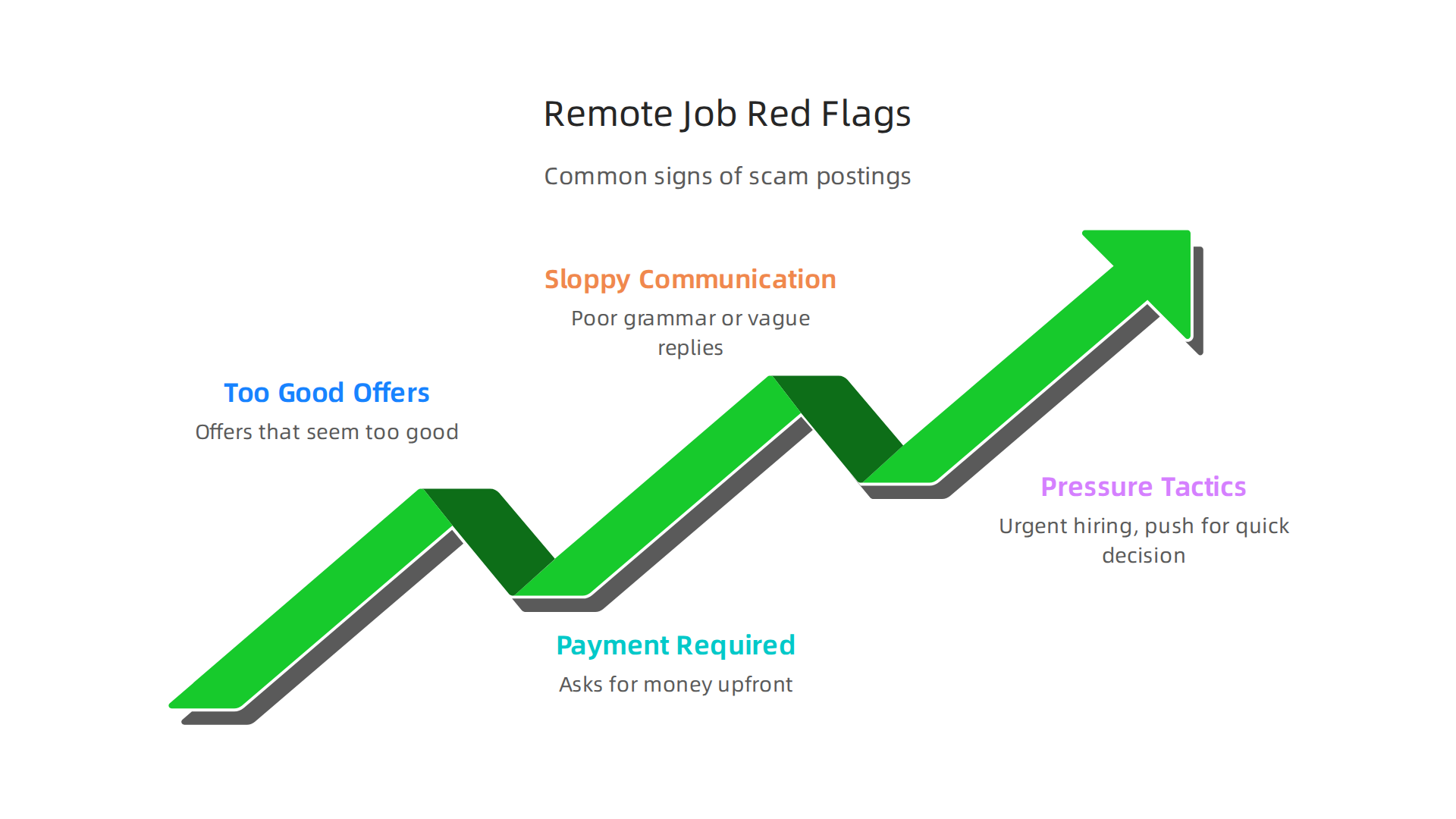
- The "Too Good to Be True" Offer: Be very skeptical of postings promising extremely high pay for minimal experience or work. As career experts note, offers of unusually high pay for minimal work are a major red flag.
- You Pay to Get Started: Legitimate companies pay you. You should never have to pay for training, software, or starter kits. Remember the simple rule: in a real job, money flows from the company to you, not the other way around.
- Sloppy Communication and Fake Emails: Poor grammar, spelling errors, and generic email addresses (like Gmail or Yahoo instead of a company domain) are strong indicators of a scam. Experts warn that contact from generic email accounts is a top red flag in recruitment fraud.
- Pressure and Secrecy: Scammers often create false urgency, pressuring you to act quickly. They may also be vague about the company, the job duties, or avoid a video interview. If basic information is hard to find, it’s a sign to walk away.
Where to Look: Trusted Platforms for Your US Search
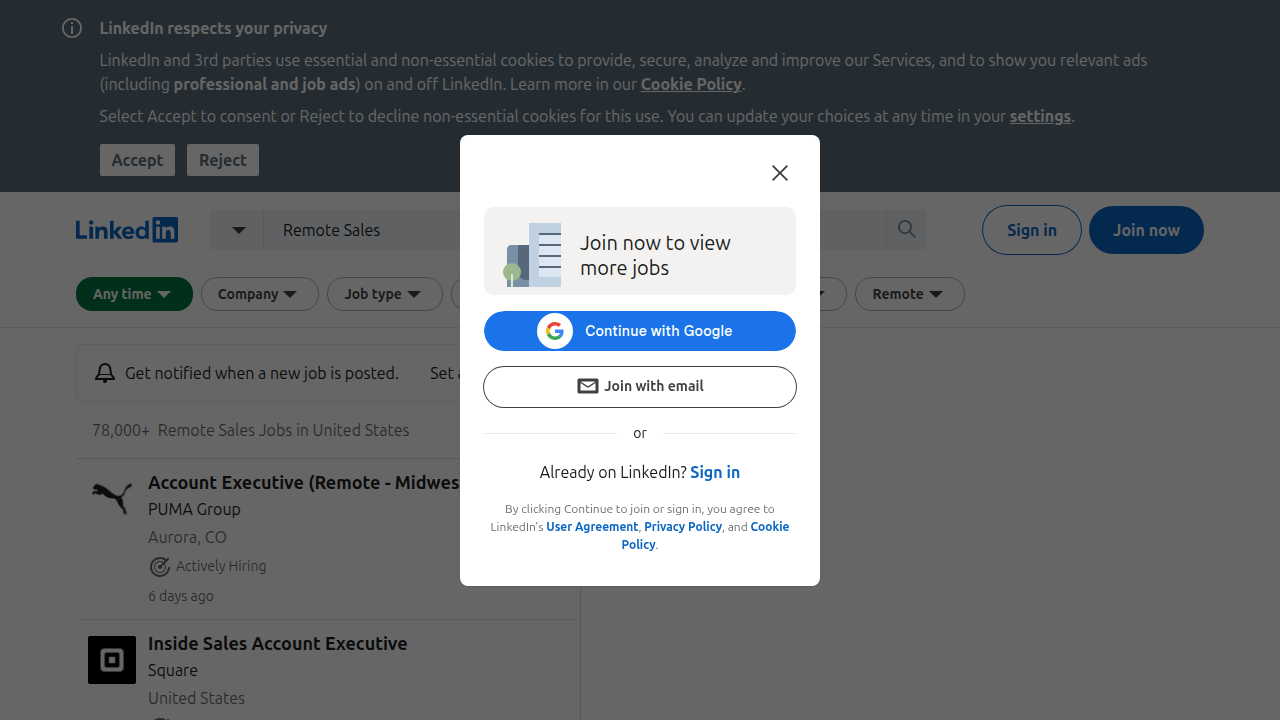
To avoid the noise, start your search on platforms known for vetting employers or hosting legitimate companies. Here’s a quick guide to where the best remote work USA opportunities are often listed.
| Platform Type | Best For | Examples |
|---|---|---|
| Specialized Remote Job Boards | Pre-vetted, 100% remote opportunities. Higher quality, less spam. | FlexJobs, Remote.co, We Work Remotely |
| Major Career Sites (with filters) | High volume, company research tools. Use "Remote" location filter. | LinkedIn Jobs, Indeed, Glassdoor |
| Company Career Pages | The most direct path. Ideal for targeting specific companies you admire. | Go directly to the "Careers" section of a company’s website. |
| Industry-Specific Sites & Networks | Niche roles in tech, sales, etc. Great for networking. | AngelList (startups), specific SaaS or sales communities. |
Research the Company’s Remote Culture
Finding a legitimate posting is step one. The next step is figuring out if the company’s remote environment is right for you. Here’s how to dig deeper.
- Read Between the Lines on Their Site: Look for a dedicated "Remote Life" or "Culture" page. Do they talk about distributed teams, async communication, or home office stipends? This shows a real investment in remote work.
- Check Social Media & Reviews: Look the company up on LinkedIn. Do employees list themselves as "Remote" in their location? Check Glassdoor reviews and search for terms like "remote," "work from home," and "management" to get unfiltered insights.
- Ask Strategic Questions in Interviews: Use the interview to interview them. Ask about:
- Team communication tools and meeting rhythms.
- How performance and success are measured for remote reps.
- Onboarding and training processes for new remote hires.
- How the company builds connection and culture across distances.
The goal is to find a role where you can thrive, not just survive. By knowing the red flags, starting your search on the right platforms, and doing your homework on company culture, you’ll move confidently toward a legitimate and rewarding remote work USA career. For a complete, step-by-step walkthrough of this entire process, from search to offer, our detailed guide on how to find legitimate remote sales jobs is your perfect next resource.
Decoding Job Descriptions: What "Remote USA" Really Means
You found a real posting. Great. Now you need to understand exactly what the company is offering. In 2026, the term "remote" can mean many different things. Decoding the job description is your key to avoiding a bad fit before you even apply.
Here’s what to look for.
Location Requirements: More Than Just "Remote"
First, check the fine print on where you can work.
- Fully Remote (Anywhere in the USA): This is the true gold standard for flexible remote work USA. It means you can work from any state, with no plans to ever require office attendance.
- Remote (Within a Specific State or Region): The company may only have legal or tax registration in certain states. A posting for remote jobs in California likely means you must already live and work there.
- Hybrid Remote: This often requires living within commuting distance of an office for required in-person days each week or month. It’s not a fully remote job.
Time Zone Expectations and Travel
"Remote USA" covers four time zones. The description should clarify expectations.
- Are core collaboration hours required? For example, "9 AM – 12 PM PST" means East Coast workers start very early.
- Is occasional travel required for team meetings, conferences, or client onsite visits? This is common and should be stated upfront. Vague language about travel can be a red flag, as experts note that unclear job details are a warning sign.
Key Clauses in Your Employment Contract
Before you sign, review these sections specific to remote jobs.
- Work Equipment & Expense Reimbursement: Will the company provide a laptop, monitor, and phone? Is there a stipend for internet or home office setup? If you’re asked to pay for essential equipment yourself, be very cautious.
- Data Security and Privacy Policy: You’ll likely sign a policy on securing company data on your home network. This is normal and important.
- "At-Will" Employment Status: Most US remote jobs are "at-will," meaning you or the employer can end the relationship at any time, for any legal reason. This is standard but good to understand.
A clear job description shows a professional company. If the location, hours, or policies are vague, it might be a sign of poor remote structure. For a complete list of what to verify before accepting an offer, use our ultimate checklist for finding remote sales jobs in 2026.
The Remote Sales Skill Stack: What Employers Actually Look For
So you understand the job description. You know what "remote USA" really means for the role. Now, here’s the big question: do you have the right skills to get hired and succeed? In 2026, landing a great remote work USA opportunity isn’t just about having sales experience. It’s about having the right kind of experience for a digital-first world.
Employers aren’t just looking for a traditional salesperson who happens to be at home. They’re looking for a modern sales professional built for a virtual environment. Let’s break down the remote sales skill stack into two parts: the technical tools you must master and the human skills you must amplify.
Core Technical Skills: Your Digital Toolkit
To be effective in remote jobs usa, you need to be fluent in the software that powers modern sales teams. This isn’t optional anymore.
- CRM Proficiency: Customer Relationship Management (CRM) software like Salesforce or HubSpot is the central nervous system of remote sales. You must be able to log activities, update pipelines, track communications, and generate reports without being reminded.
This skill is so essential it’s consistently listed among high-income skills to learn for sales positions.
- Sales Automation & AI Co-Pilot Tools: Top performers use tools to automate repetitive tasks like email sequencing, data entry, and lead scoring. In 2026, this also means having AI fluency—knowing how to use AI assistants to research prospects, personalize outreach at scale, and analyze call transcripts for insights, as highlighted in industry analyses on essential sales skills for 2026.
- Virtual Demo Mastery: Conducting engaging, persuasive product demos over video call is an art. This includes managing your presentation software, handling screen sharing smoothly, using virtual whiteboards, and keeping a distracted remote prospect engaged. It’s the digital equivalent of a perfect in-person pitch.
Essential Soft Skills: Your Human Operating System
If technical skills get you in the door, these human skills close the deal and build a lasting career in fully remote jobs.
- Asynchronous Communication: This is the #1 soft skill for remote work. You must write crystal-clear emails, Slack messages, and project updates that require no follow-up questions. You need to document everything and communicate progress without constant real-time meetings. A guide to trending sales skills often emphasizes the importance of clear, concise communication.
- Relentless Self-Motivation & Discipline: Without an office structure, you are your own manager. This means creating your own daily routine, proactively tackling your pipeline, and staying focused without supervision. It’s about owning your results.
- Digital Rapport Building: How do you build trust through a screen? It requires extra attention to active listening on calls, reading virtual cues, and finding genuine points of connection without sharing a physical space. Experts note that combining this relational empathy with analytical thinking is a key differentiator for modern sellers.
How to Assess Your Gaps and Find the Right Training
Feeling a gap in one of these areas? That’s normal. The key is to proactively close it.
- Audit Yourself Honestly. Go through the list above. For each skill, rate yourself from 1 (novice) to 5 (expert). Be brutally honest. Where are your 1s and 2s?
- Find Credible, Specific Training. Don’t just take a generic "sales" course. Look for training that specifies remote or virtual sales techniques. For mastering consultative selling in a digital context—a skill where top performers are 88% more likely to excel—seek out specialized programs that focus on this modern approach, as noted in research on sales skills that matter.
- Build a Project to Demonstrate Skill. Learning a new CRM? Build a mock pipeline for a fictional product. Improving async communication? Rewrite and polish your standard prospecting email templates. Concrete proof beats just listing a course on your resume.
Building this skill stack takes time, but each skill you add makes you a stronger candidate for legitimate remote jobs. It shows employers you’re not just looking for any job—you’re building a career designed for the future of work.
Ready to put these skills into action and start your search with confidence? Begin by learning how to find legitimate remote sales jobs with our step-by-step guide.
Understanding Compensation: Salary, Commission, and OTE in Remote Sales
You have the skills for remote work USA. Now, let’s talk about the money. One of the most confusing parts of looking at remote jobs usa listings is understanding the pay. You see terms like "OTE," "base + commission," and "uncapped earnings." What does it all really mean? And what can you actually expect to earn?
Let’s break down the compensation structure for fully remote jobs so you can evaluate opportunities with clear eyes.
Demystifying On-Target Earnings (OTE)
The most common term you’ll see is OTE, which stands for On-Target Earnings. This is not a guarantee. It’s a projection.
- What it is: OTE represents the total annual income you can expect if you hit 100% of your sales quota. It’s calculated as Base Salary + Commission at quota attainment. A clear definition and trends for 2026 can be found in guides on salesperson compensation models.
- Realistic vs. Inflated Numbers: Be cautious. Some companies advertise an attractive OTE that is very hard to achieve due to unrealistic quotas. Always ask about the "quota attainment rate" – what percentage of the sales team actually hits their quota? A realistic OTE is one that a majority of seasoned reps on the team can regularly achieve.
Base Salary + Commission vs. Commission-Only Roles
Remote sales roles typically come in two main pay structures. Each has pros and cons.
Base Salary + Commission (The Standard Model)
This is the most common model for remote jobs at established companies. You get a guaranteed base salary plus additional commission when you make sales.
- Pros: Financial stability. You have a predictable income to cover living expenses, which is crucial for budgeting. It often includes benefits like health insurance and 401(k) matching.
- Cons: The base salary might be lower than a non-sales role. Your total earnings are capped by the commission plan structure (unless it has "accelerators" for over-performance).
Commission-Only Roles
Your entire pay is based on what you sell. There is no base salary.
- Pros: Unlimited earning potential. You directly eat what you kill. These roles can be great for highly experienced, self-motivated closers.
- Cons: High risk and unpredictable income. No safety net. These are more common in certain industries like real estate or high-risk startups. Beginners should be very wary.
Choosing between them depends on your financial needs and risk tolerance. A detailed look at the benefits and drawbacks of the OTE model can help you decide which structure aligns with your goals.
Industry Benchmarks for 2026: What Can You Expect?
While pay varies by company size, location, and industry, here are general benchmarks for key remote sales roles in the USA for 2026. Use these as a starting point when evaluating job offers.
- Sales Development Representative (SDR/BDR): This is an entry-level role focused on prospecting and setting meetings. According to 2026 data, the median OTE is around $85,000. A typical pay mix is 65% base salary and 35% variable commission. OTE can range from $60,000 to $95,000+, as noted in recent sales compensation benchmarks.
- Account Executive (AE): This is a closing role. Compensation is higher and varies widely. For mid-market AEs, OTE often ranges from $120,000 to $180,000. For enterprise AEs selling complex solutions, OTE can exceed $250,000. The pay mix often shifts to 50% base / 50% commission.
- Account Manager / Customer Success Manager: This role focuses on growing existing customer accounts. It usually has a higher base salary and lower variable component. Median OTE often falls between $90,000 and $130,000.
Remember, these figures represent on-target earnings. Your actual take-home pay depends on your performance. When you’re evaluating a potential remote work USA role, use this framework to ask smart questions about quota, attainment rates, and the commission plan details.
Ready to find opportunities that match both your skills and your income goals? Start your search with a clear strategy using our ultimate checklist for finding remote sales jobs in 2026.
Acing the Virtual Interview Process for a US Remote Role
So you understand the pay structure for remote jobs usa. The next hurdle is actually landing the offer. The interview for a fully remote job is your chance to prove you can excel outside a traditional office. Here’s how to prepare for and shine in a virtual interview in 2026.
Pre-Interview Prep: Set the Stage for Success
Your preparation starts long before the video call link is clicked. Think of it as setting your remote workspace for a flawless performance.
First, master your tech and environment.
- Tech Check: Test your camera, microphone, and internet connection an hour before. Use a wired internet connection if possible for stability. Close all unnecessary applications on your computer.
- Professional Background: Choose a clean, tidy, and neutral background. A plain wall or a neat bookshelf works perfectly. Good, front-facing lighting is crucial so the interviewer can see you clearly. As noted in guides on how to prepare for a virtual interview in 2026, your environment directly signals your organizational skills.
- Your Opening Pitch: The "Tell me about yourself" question is your opening sales pitch. Craft a concise, 60-90 second story that connects your past sales achievements directly to the remote role you want. Focus on results and remote-relevant skills like self-motivation.
Demonstrating You’re Remote-Ready
Hiring managers for remote work usa positions aren’t just evaluating your sales skills. They’re assessing if you can thrive independently. Use behavioral questions to prove it.
Modern sales interviews in 2026 focus on specific competencies beyond personality. Be ready to discuss:
- Self-Management: "Describe a time you managed a long-term project without daily oversight." Highlight your use of tools and personal accountability.
- Communication Over Distance: "Tell me about a time you successfully onboarded a new client or collaborated with a team member entirely remotely." Emphasize clear, proactive updates.
- Tech & Tool Proficiency: Mention your experience with CRM platforms (like Salesforce), sales engagement tools, and video conferencing. According to a 2026 framework for sales interviews, showing comfort with AI-assisted prospecting or stakeholder mapping tools is a major plus.
Prepare a few questions that show you understand remote dynamics. Ask about team communication rhythms, performance metrics, and tools the team uses.
The Essential Post-Interview Follow-Up
Your work isn’t done when the call ends. A strong follow-up cements your professionalism and interest.
- Timing is Key: Send a thank-you email within 24 hours. This is non-negotiable for remote jobs.
- Personalize It: Reference a specific topic you discussed. For example, "I enjoyed our conversation about how your team uses [Tool Name] to collaborate. It reinforced my interest in contributing to your pipeline."
- Reiterate Your Fit: Briefly connect one of your strengths back to a challenge or goal the hiring manager mentioned. This shows you were listening and are already thinking about how to help.
- Keep it Concise: Hiring managers are busy. A few thoughtful sentences are more powerful than a long essay.
Following these steps shows you’re not just a great salesperson, but a professional built for the autonomy of remote work usa. For more on finding the right opportunity to practice these skills on, revisit our guide on how to find legitimate remote sales jobs.
Career Pathways and Long-Term Growth in Remote Sales
You’ve landed your first fully remote job in the USA. What’s next? Many people wonder if working from home limits their career growth. The good news is, it doesn’t. In fact, remote work usa offers clear and exciting career paths if you know how to navigate them. Your growth depends on your performance and strategy, not your physical location.
The Typical Promotion Ladder in Remote Sales
Most remote sales careers follow a similar upward track. This path is well-defined and performance-based.
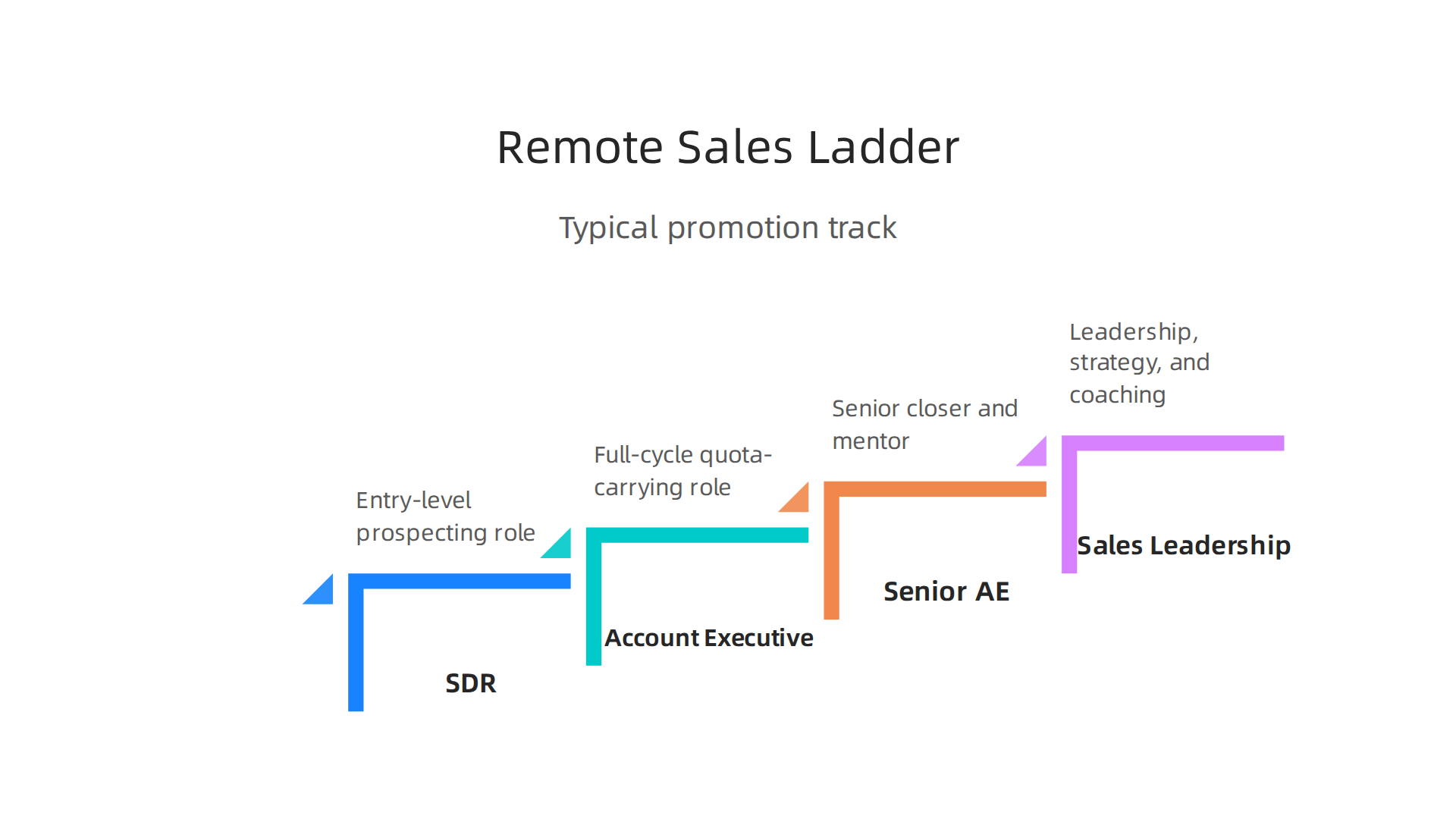
- Sales Development Representative (SDR/BDR): This is the classic entry point. You focus on outbound prospecting, generating leads, and booking meetings for Account Executives. It’s where you learn the fundamentals. Guides confirm that SDR roles are designed as entry points and don’t require a sales background, making them perfect for starting your journey in remote jobs usa.
- Account Executive (AE): After proving yourself as an SDR (usually in 12-18 months), you can promote to closing deals. Here, you manage the full sales cycle, negotiate, and hit revenue targets. Lists of the best remote sales jobs in 2026 consistently highlight AE roles as high-earning opportunities.
- Senior AE or Strategic Account Manager: With consistent success, you move up to handling larger, more complex accounts or mentoring junior AEs.
- Sales Leadership: The next step is moving into management as a Sales Team Lead, Manager, or Director, overseeing a team of remote reps.
It’s important to know that moving through these roles faster is common today. Industry analysis shows the average sales rep tenure has dropped to a projected 18-30 months in 2026. This isn’t seen as job-hopping. It’s strategic career advancement.
Building Visibility and Advocating for Promotion Remotely
You can’t casually stop by your boss’s desk. So, you must be intentional about making your wins and ambitions seen.
- Document and Broadcast Your Success: Keep a running log of your achievements. Did you exceed quota? Onboard a key client? Share these updates in weekly team emails, during one-on-one meetings, and on internal chat channels like Slack.
- Master Virtual Communication: Be the person who speaks up in video meetings with insightful points. Volunteer to present a win or a lesson learned to the wider team. Your voice and ideas need to be heard regularly.
- Schedule Career Conversations: Don’t wait for an annual review. Proactively schedule a video call with your manager every few months to discuss your career goals. Ask, "What skills do I need to develop to be ready for an AE role in the next year?" This shows initiative.
- Seek Out Mentorship: Connect with senior AEs or managers in your company. Ask for virtual coffee chats to learn about their path. These relationships are crucial for guidance and advocacy.
For a deeper dive on positioning yourself for these roles from the start, our guide on finding remote sales jobs in 2026 includes tips on identifying companies with strong growth tracks.
Beyond the Core Path: Specializing Your Career
The sales world isn’t just about moving from SDR to AE to Manager. There are valuable specialized paths that offer growth without necessarily managing people.
- Sales Operations: If you love data, processes, and tools, this is for you. Sales Ops professionals manage the CRM, analyze performance metrics, and build sales reports to help the team sell more efficiently.
- Sales Enablement: This role focuses on training and equipping the sales team. You create training materials, playbooks, and resources to help reps improve their skills and use tools effectively.
- Strategic or Enterprise Accounts: You can specialize in selling to only the largest, most complex clients. This requires deep industry knowledge and relationship-building skills over long sales cycles.
These roles are critical in modern sales teams and offer excellent long-term career stability and high compensation in the remote work usa landscape. For a visual breakdown of these paths, resources like this overview of the ideal tech sales career path for 2026 can be very helpful.
The bottom line? A remote sales career in the USA offers tremendous growth. Your trajectory is in your hands. By performing consistently, strategically building your visibility, and exploring all the paths available, you can build a rewarding and lucrative long-term career entirely from your home office.
Summary
This article explains why the United States is the epicenter for remote sales careers in 2026, describing the market trends, industry hotspots, and why high-paying remote sales roles are expanding. It covers where remote sales jobs are concentrated, how employer expectations have shifted to outcome-based models, and practical steps to separate legitimate opportunities from scams. The piece walks through how to decode job descriptions (location, time zones, contract clauses), what the modern remote-sales skill stack looks like (technical tools and soft skills), and how compensation typically works, including OTE and pay structures. It also provides interview preparation tailored to virtual hiring and outlines typical promotion paths and specialization options for long-term growth. Readers will learn how to focus their search, evaluate offers, close skill gaps, and position themselves for advancement in a remote-first sales landscape.